


Touching the Promised Land 16 | Day 6 – QUMRAN
Updated: Aug 16
HIDDEN CLIFFS AND SACRED TRUTH
A ride of about twenty minutes from Qasr el-Yahud brought us to Qumran National Park, situated on the western shores of the Dead Sea. Much like Qasr el-Yahud, the archaeological site of Qumran lies within the territory of the West Bank, which is managed and operated by Israel as one of its national parks.

Highlights
Qumran:
For a journey undertaken to "deepen my understanding of the Bible" (as noted in the first installment of this travelogue), a foot-on-the-ground visit to the ruins of Qumran was indispensable.
Qumran, whose caves shielded the vast majority of the Dead Sea Scrolls for a millennium, was the stop that had been locked into my itinerary from the very beginning of my preparation for this trip. However, I had not anticipated the site offering so much more than just the caves themselves; it features the extensive ruins of the ancient Qumran community settlement and a small yet informative on-site museum, even though the Dead Sea Scrolls themselves are now housed at the Shrine of the Book at the Israel Museum in Jerusalem.
The Dead Sea Scrolls:
The Dead Sea Scrolls—an irrefutable textual witness testifying to the accuracy and authenticity of the Bible—refer in a broader sense to the ancient manuscripts uncovered across several different sites west of the Dead Sea. However, it was the cluster of caves right here at Qumran that yielded the earliest discoveries and the vast majority of the texts (comprising twelve caves in total, the final one discovered as recently as 2017).
Most of the Dead Sea Scrolls excavated from these various locales are housed in the Shrine of the Book at the Israel Museum—a museum I was to visit two days later. Within the collection, archaeologists have identified fragments or complete scrolls of almost every single book of the Hebrew Bible, alongside a wealth of other non-biblical sectarian texts and scroll fragments, such as the Community Rule, the War Scroll, and the Temple Scroll.
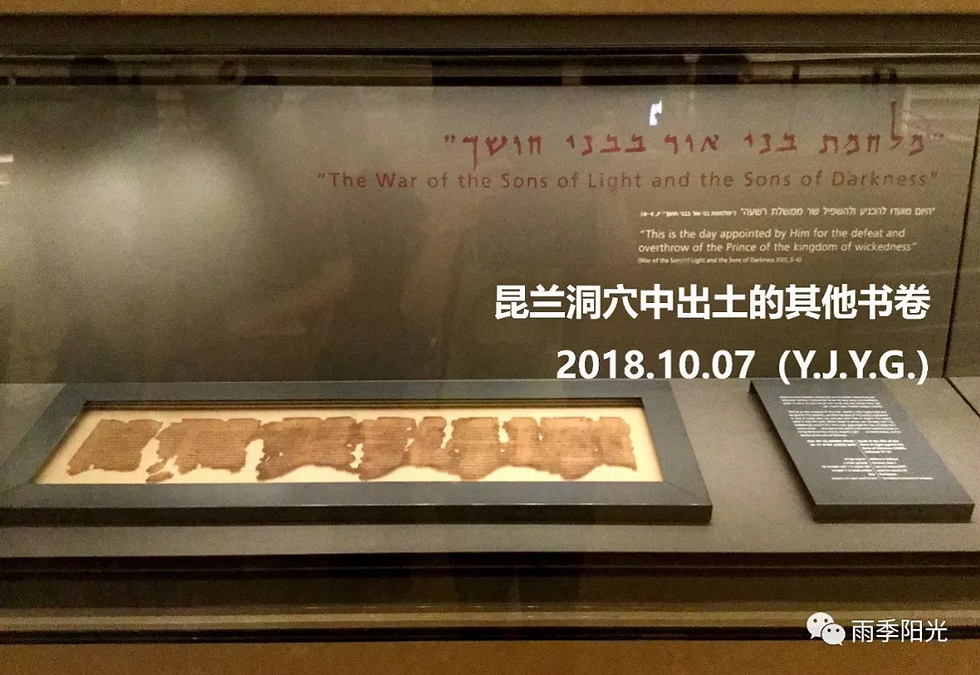
Before the discovery of the Dead Sea Scrolls, secular critics cast serious doubts on the reliability and historical authenticity of the Old Testament. Consequently, they questioned the validity of biblical prophecy and its fulfillment, suggesting that the prophecies regarding the Messiah were written after the events had already taken place—to say the very least.
Because the intricate tapestry of predictive prophecy and its subsequent fulfillment is foundational to Christian orthodoxy, such skepticism attacked the very bedrock of the Christian faith, serving as a tool to undermine the divine nature of Scripture. The discovery of the Dead Sea Scrolls, however, provided undeniable archaeological evidence that pushed the verified timeline of the Old Testament texts back by a full millennium. In doing so, it powerfully demonstrated that despite a thousand years of manual copying, the scriptures had been transmitted with breathtaking accuracy, firmly vindicating the authenticity of biblical prophecy.
The Great Isaiah Scroll:
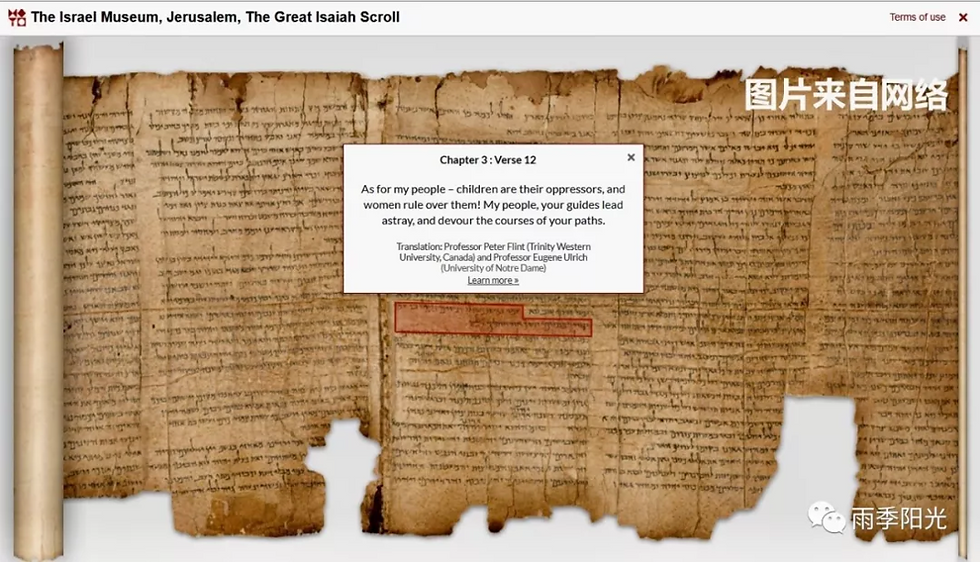
Among the discoveries, the Great Isaiah Scroll stands out as the most beautifully preserved, containing the book nearly in its entirety. The majority of biblical scholars place the composition of Isaiah in the eighth century BC, recognizing it as one of the major prophetic books. Carbon-14 dating of the Qumran Isaiah Scroll places its copying between 356 BC and 103 BC, establishing its existence at least a century before our Lord’s incarnation.
Many Christian scholars view the Book of Isaiah as the premier prophetic text. Although the division of the Bible into chapters and verses did not begin until the thirteenth and sixteenth centuries respectively, an extraordinary structural parallel often noted by believers is this: just as the Bible contains 66 books (39 in the Old Testament and 27 in the New), the Book of Isaiah consists of exactly 66 chapters. The first 39 chapters open with the rebellion of God's people and close with the sobering prophecy of the Babylonian exile, while the final 27 chapters are filled with comfort, the prophetic vision of the suffering and victorious Messiah, and the promise of future glory.
Remarkably, chapter 53—cited above from Evidence That Demands a Verdict for its stunning prophecy of the Messiah’s substitutionary atonement and resurrection—sits in the middle of these final 27 chapters (with 13 chapters flanking it on either side), beautifully foretelling how our Lord Jesus would serve as the sinless sacrificial Lamb, dying and rising again to grant eternal life to all who believe.
As Josh McDowell famously highlights in Evidence That Demands a Verdict, quoting the remarkable textual consistency found in the famous Isaiah Scroll:
"Of the 166 words in Isaiah 53, there are only seventeen letters in question. Ten of these letters are simply a matter of spelling, which does not affect the sense. Four more letters are stylistic changes, such as conjunctions. The remaining three letters comprise the word 'light,' which is added in verse 11, and which does not affect the meaning greatly... Thus, in one chapter of 166 words, there is only one word (three letters) in question after a thousand years of transmission—and this word does not significantly change the meaning of the passage."

The Isaiah Scroll, along with several other key manuscripts, has been meticulously catalogued, translated, and digitised. It is now available to the public online (http://dss.collections.imj.org.il/isaiah), allowing anyone in the world to view and study these sacred texts free of charge.
Sightseeing Notes
"The Secrets of Qumran" Museum
This visitor centre and museum uses a short documentary film, informative display panels, and authentic reconstructions (though not the original antiquities themselves) to recreate the daily lives of the Essene community believers (or priests) who once lived here, offering a glimpse into how the cave scrolls were originally discovered.
Upon arrival, we toured the museum first. Gaining a foundational overview of the site and its primary archaeological discoveries proved incredibly helpful before we stepped out to examine the physical ruins.
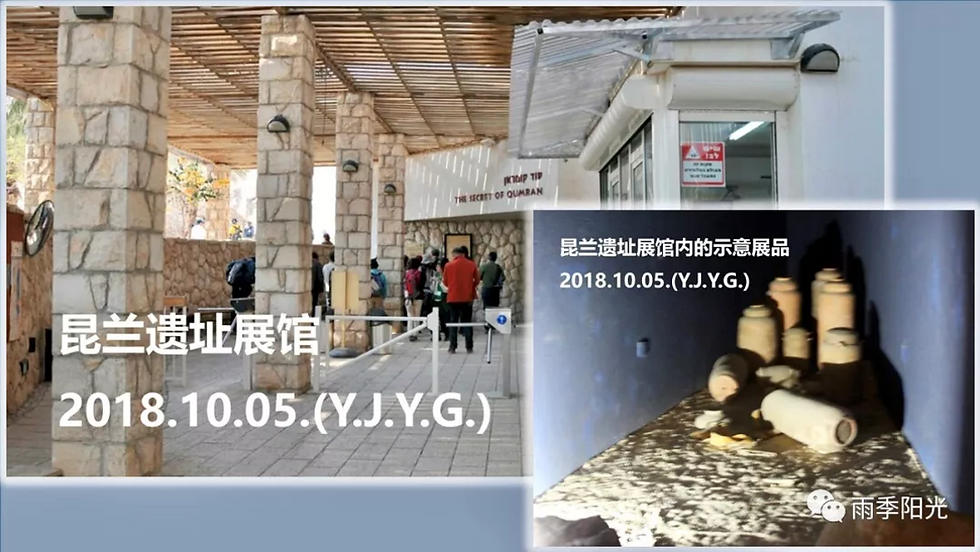
The experience begins in an auditorium where an introductory film is shown, alternating at fixed intervals between English and other languages. Visitors are then guided into the main exhibition hall. Though our time was somewhat pressed, and the echoing commentary of various tour guides talking to their groups in the enclosed space was a bit of a distraction, I still managed to quickly read through the introductory text for each display section. Spending this extra time inside this little museum definitely facilitated a much better understanding of the Yahad Community Site.

The Qumran Yahad Community Site
This archaeological site is widely believed to be the settlement where a specific Jewish sect (often identified as the Essenes) lived, worked, and painstakingly copied the Dead Sea Scrolls.

The excavation has laid bare the spaces where they underwent daily ritual immersions, shared communal meals, and worked on their manuscripts. Among these, the ritual baths (mikva'ot) are by far the most numerous structures uncovered.

Interestingly, no sleeping quarters have ever been found on-site. This has led archaeologists to surmise that the community members may have spent their nights in tents—evoking the spiritual lessons of the Jewish festival of Sukkot (the Feast of Tabernacles)—or nestled in the nearby hillside caves, much like the monastic cells we observed earlier on the Mount of Temptation near Jericho.
The ruins also reveal dedicated workshops for agricultural processing, alongside areas used for throwing, firing, and storing the distinct earthenware jars designed to protect the scrolls (distinct from other ritual containers like scroll cases, tefillin, or mezuzot).

The Qumran Caves
This is the famous network of caves where the biblical manuscripts and contemporary texts were preserved. Cave 4 is historically the most significant in terms of fragments discovered, while Caves 7, 8, and 9 can be reached on foot directly from the community settlement.

If I Had More Time...
Our tour of the national park was quite comprehensive, and the ruins themselves proved far richer and more multi-layered than my own limited knowledge had led me to expect, leaving me with a profound sense of reward.
Of course, had time permitted, it would have been wonderful to hike directly up to the mouths of those ancient caves that sheltered the manuscripts for millennia, if only to gain a more immediate, firsthand impression.
Touching the Promised Land 17 | Day 6 – THE MOUNT OF OLIVES
TEARS OVER JERUSALEM AND THE PROMISE OF RETURN
Leaving the arid cliffs of Qumran behind, we left the low-lying basin of the Dead Sea and began our long, winding ascent into the hills of Judea. The stark, silent desert slowly gave way to a landscape steeped in the final, dramatic chapters of our Lord's earthly ministry.
Our journey was bringing us at last to the crest of the Mount of Olives—a place of sweeping vistas, tears over Jerusalem, and the enduring promise of a glorious return.
