

Touching the Promised Land 05 | Day 1 - TEL MEGIDDO
Updated: Aug 16
LAYERS OF HISTORY, ECHOES OF WAR
Highlights

Megiddo holds a formidable place in the biblical narrative. Its immense strategic importance stemmed from its unrivaled geographic position: it guarded the critical pass along the Via Maris, the vital international highway connecting Egypt in the south with the empires of Mesopotamia and Anatolia in the north. Whoever controlled Megiddo commanded this military and trade artery, making it a prize for which every regional power—from the Canaanite kings to the Pharaohs of Egypt and the kings of Assyria—was compelled to fight.
Megiddo is therefore mentioned in many conquest accounts in the chronicles of the kings, among which, the most well know are Joshua (Joshua 12:21), and the era of the Judges (Judges 5:19). King Solomon fortified it (1 Kings 9:15). It later became the stage for the tragic deaths of kings: Judah's King Ahaziah (2 Kings 9:27), and the righteous King Josiah (2 Kings 23:29-30). Its strategic location continued making it a battlefield for millennia, into the modern era with the British victory over the Ottomans in WWI.
Most significantly for Christians, Megiddo provides the backdrop for prophecy: the Book of Revelation names "Armageddon" (a Greek derivation of Har Megiddo, or Mount Megiddo) as the stage for the final cosmic battle between the forces of God and evil.
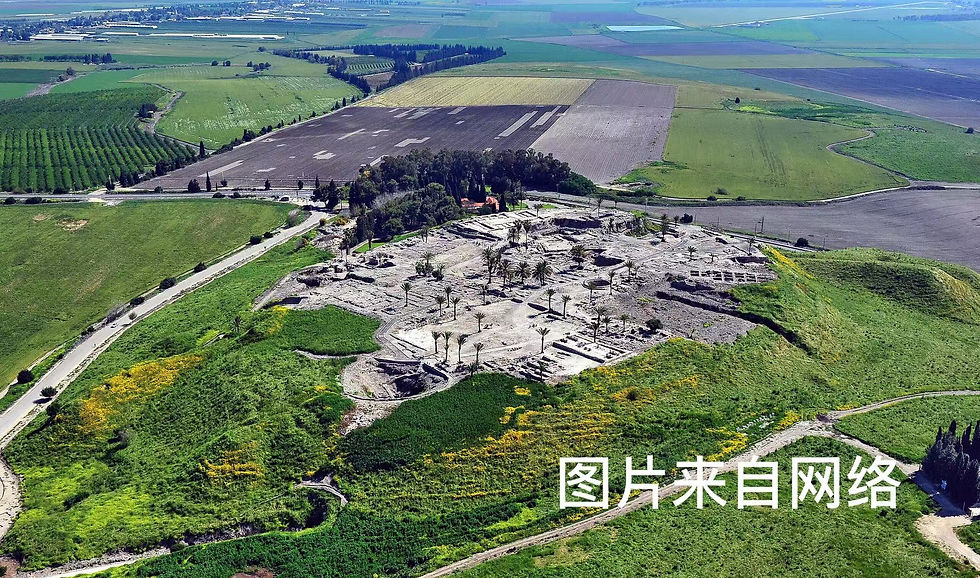
Tel Megiddo is part of the UNESCO World Heritage Site, "Biblical Tels - Megiddo, Hazor, Beer Sheba." A "tel" is a mound created by successive layers of human settlement over centuries. The earliest remains at Megiddo date from the Early Bronze Age (c. 3500 BCE), with evidence of continuous habitation through the Iron Age, forming a remarkable 26-strata archive of ancient history.
Sightseeing Notes

Our guide explained that with a packed schedule and a hard 5:30 PM closing time for our final stop in Nazareth, a thorough exploration of Tel Megiddo was impossible; we would have to content ourselves with a view from a distance. Knowing that Nazareth—the town of Jesus' youth—was a spiritual cornerstone of the trip, and having at least laid eyes on Megiddo, I agreed to a brief, distant admiration before we continued our hurried march.
Even from the road side, the sight of the Tel and surroundings was profoundly evocative. The sprawling Megiddo Plain, the ancient "land flowing with milk and honey," lay before us. I could almost feel the weight of its history—a fertile land positioned at the "crossroads of the world," forever caught between blessings and conflicts.

If time permitted......
This first day's itinerary (and it's not even over yet!) truly deserved at least four days if I return in the future. While this whirlwind tour of northern Israel was a blessing, the pace was more frantic than I had anticipated.
Next time, I would allocate a proper visit to Tel Megiddo—it must be unparalleled to walk through so many traceable strata of history in one place. I would also love to glimpse the nearby Kibbutz.
If I could stretch this single day into a week, I would probably try cycling across this historic plain (from the car, I spotted cyclists and was told the scenery in Sprint time is breathtaking), or even attend a concert in the Megiddo Forest.
Touching the Promised Land 06 | DAY 1 - NAZARETH
HOMETOWN OF JESUS OUR LORD
Leaving the ancient plains of prophecy behind, we journeyed from the site of the final battle to the quiet town that cradled the beginning of our redemption.
My next stop was Nazareth, the humble home where the Word made flesh dwelt among us, and where Jesus "grew in wisdom and stature, and in favor with God and man" (Luke 2:52).
